
We did not want to do laundry yesterday. The little sunshine we got in the late afternoon was not to be missed. We thought we could do laundry after dinner, but our host informed us that it’s the quiet period after 22:00 and we should avoid laundry as the washing machine is outside. Our plan was to get up a little earlier than strictly necessary to make our way to our first adventure of the day. What we did not plan for is that the laundry machine is shared with our hosts, and they got up earlier than us, despite our very early 7:30 wake-up. So, not only is it pouring rain out and we have to get out to the washing machine in full rain gear, but I had to do multiple relays between the washing machine shed and our guesthouse in hopes of catching them as they emptied their load.
During my relays to the washing machine, Karine went to the local bakery (📍Princesa do Douro – Pastelaria) for coffee and breakfast. Not having lids for the disposable cups and being conscious of the pouring rain, Karine opted to skip coffee and make up for it in pastry selection. At the very last minute, I caught up with our host and was able to do a quick load, get it on a drying rack, and head out at the last possible second.
Google told us it would take 1:30 to make our way to the destination. We had planned for 1:30 to make the distance. We did not take into account that road construction runs in the daytime and traffic is slower as the roads are crowded with trucks ferrying the harvested grapes. We are in wine country during harvest season after all. It made for a beautiful but, again, super rainy, drive.
We had to drive to a set of GPS coordinates (📍here) to find the road heading down to the Côa River, where we were to find the boat that would bring us to our first Paleolithic stone carvings. They told us to arrive 15 minutes before departure but, really, arriving at the time of departure would have been fine. As we arrived, the guides were figuring out if they could take us out on the boat or not. By the time we arrived, the rain had just stopped, but the boat is electric and charged by solar panels. With a week straight of rain, the batteries had a hard time charging. After much discussion and technical consultation, it was judged there was enough charge for us to go and get back.
We originally thought the Fariseu site would be carvings only visible by boat, but it turns out it’s a lot easier to navigate to the site than to drive to it. The boat ride itself came with the history of the site: the archaeological excavation started in the early 1990s when a dam project was started on the Çoa River. As the archaeologists worked on the now-dry riverbed, they discovered carvings. With more research, they found they were from the Paleolithic period. The carvings, mostly based on style, were dated to between 30,000 and 10,000 years before today. They had to fight to get the site preserved and the dam project abandoned. They succeeded, and with the election of António Guterres (currently the secretary-general of the UN), the site was registered as a UNESCO World Heritage site in 1998.
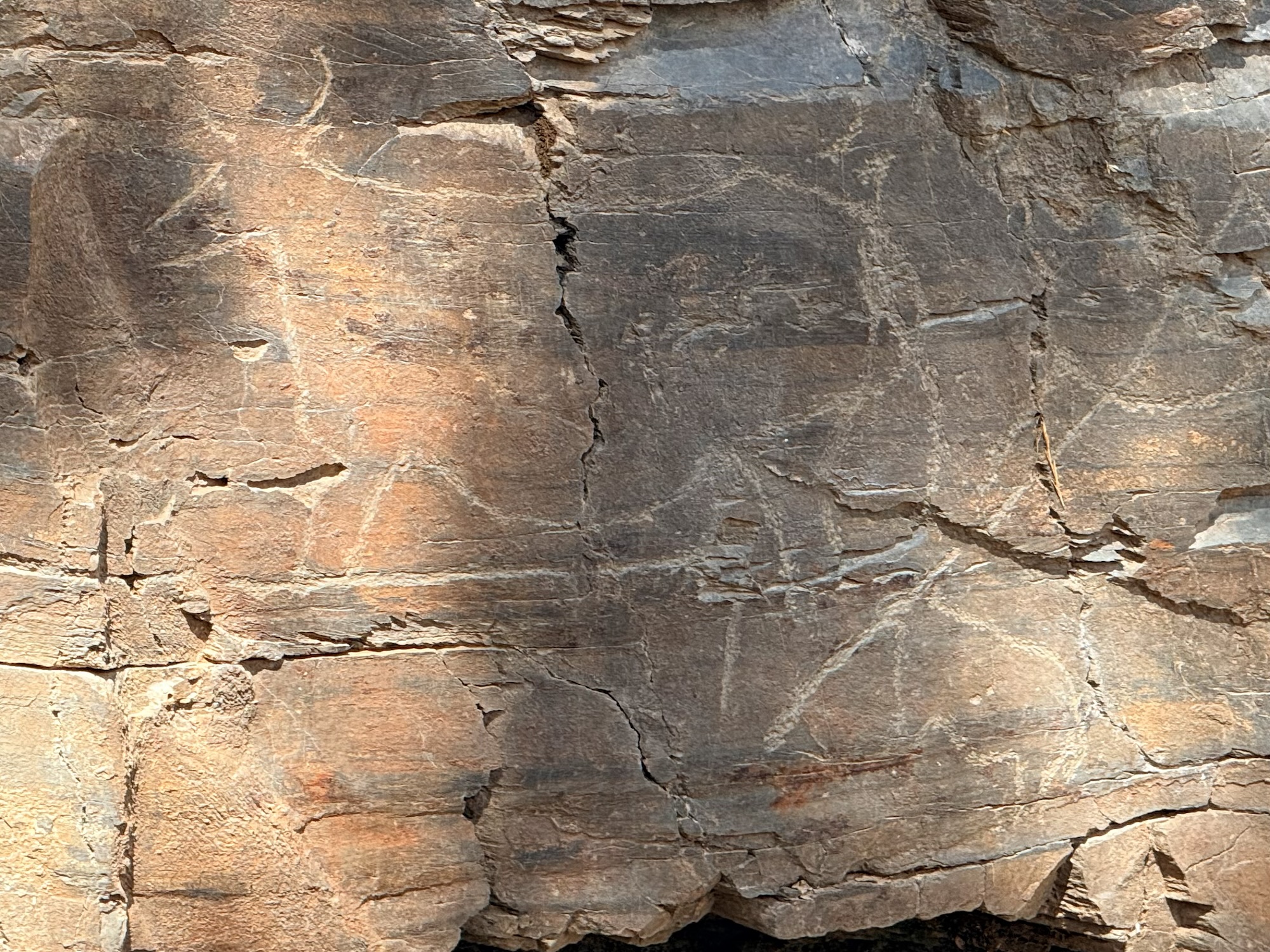
Once we arrived at the carving site, we realized that it was essentially one wall made of a cross-section of schist with a jumble of lines on it. If for no other reason than helping regular people make sense of the jumble of lines, requiring a guide to visit the site makes a lot of sense. The explanation of the site was useful both to see what was carved (large herbivores of the time) and to understand that our ancestors had the good idea to carve one on top of another. Nobody is sure why they did that, but it sure made archaeologists’ and site visitors’ lives quite a bit harder. In the end, the visit was instructive and allowed us to see some nature. The boat ride on the river was peaceful and gorgeous.


Back to our car, we sprinted to the nearby village of Vila Nova de Foz Côa to grab something to eat before our second Paleolithic carving visit of the day. Being the small town next to the tourist attraction that is the carvings, the village of roughly 3,000 inhabitants is the prime destination for a quick meal nearby. Sadly, we arrived around 14:00, and most places were closed. We did find a restaurant to feed us and the pastry shop next door for dessert and coffee, but I would not send anyone there. The only positive thing we could say was that the meat was cooked.


Not wanting to spend too much time in the town but having time to kill before our next visit, we stopped by the 📍Miradouro de São Gabriel for the stunning views of the valley.


The second site was Panascosa, a short Jeep ride from the 📍Centro de Recepção de Castelo Melhor. It’s a second guided visit, and we realized very quickly that most of the explanation and the story being told are exactly the same as at the previous site
- building of the dam — check
- finding the carvings — check,
- fight to protect the site — check,
- carvings being dated mostly from the style and some from the layers of sediment that buried one of the carving — check.
We did see a new animal being depicted (a fish). In the end, rainy weather made for smaller groups, making most of our visit today “semi-private”. Going through the same story with two different guides got us more details, as they don’t describe the story in the exact same way.


After the visits, we drove home and went for dinner at 📍Quinta de La Rosa. We had a fine meal with great wine. The only exception was the dessert, which was underwhelming. The evening walk back afforded us the opportunity for some night photography.


Tomorrow is supposed to be sunnier and warmer. We’re hoping to go for a hike after going to the last carving site of our trip.